Two customers,
two starting points.
Someone browsing the cars on offer and someone looking for a particular vehicle are not starting with the same question. The published site gives them separate routes through vehicle listings and individual-import information.
That distinction makes the navigation useful. A buyer who has found a car can explore its details; a buyer with a specification in mind can learn about the sourcing service before contacting the business. Neither needs to work through the other route first.
Let the photograph
open the conversation.
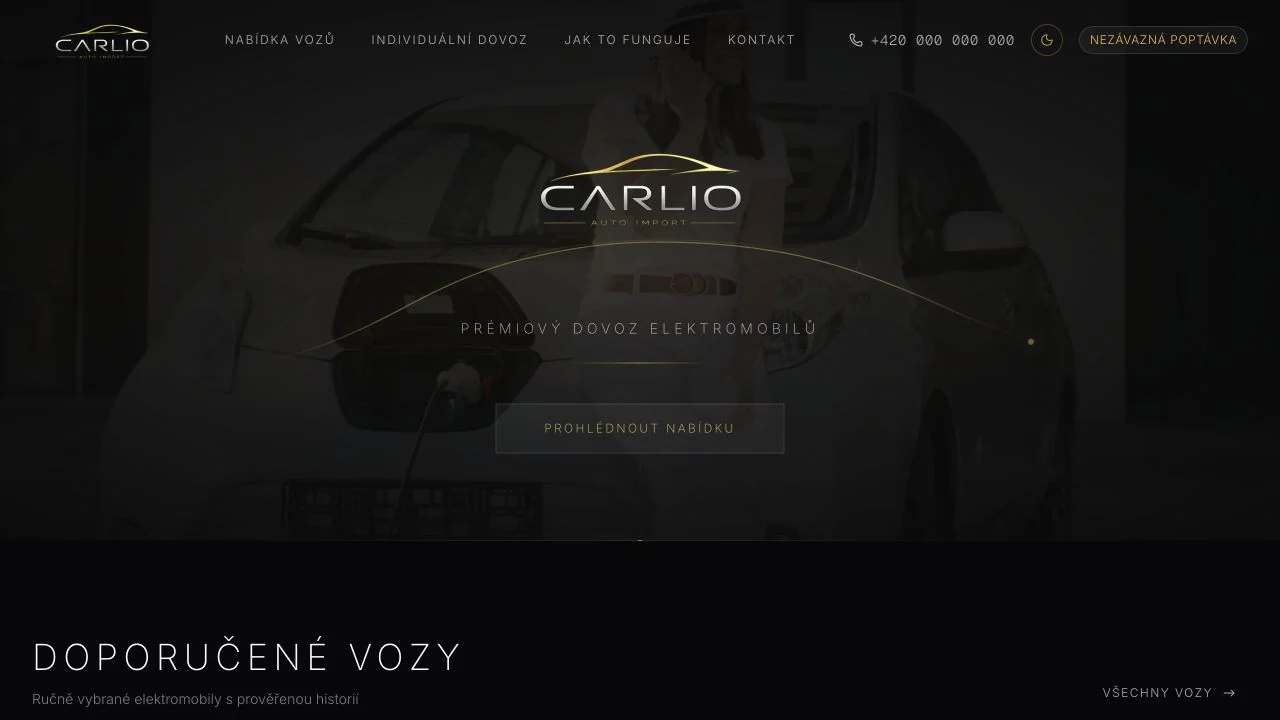
The homepage gives vehicle photography a prominent role. Listing previews place details such as model, year, mileage and battery information alongside the image. The service and process pages remain available from the main navigation.
The design principle is straightforward: a photograph creates interest, then the page must provide enough detail to make the next action worthwhile. For an actual stock catalogue, the business still needs to maintain accurate specifications, prices and availability.
- Vehicle browsing
- Keep the vehicle identity and useful specifications together.
- Import service
- Explain the steps separately from the available-car listings.
- Contact
- Give the visitor a clear route to ask about a car or a sourcing requirement.
An automotive identity
with practical navigation.
The dark presentation, large images and condensed headings give the site a distinct automotive character. Clear links to the vehicle range, import service, process and contact page provide structure around that visual treatment.
The published build lets you explore the visual treatment and page structure for yourself. This story describes that work; it does not report measured sales or enquiry results.
What a similar build
needs from the business.
A new automotive project starts with the stock source, approved vehicle images and the questions the sales team needs an enquiry to answer. We then agree how listings will be updated and whether an existing inventory service needs to connect.
A stock feed, finance tool, CRM connection or managed listing system needs its own specification. The standard website packages cover defined brochure and service pages; additional catalogue functionality is quoted separately.
Work directly with Charlie
Tell me how
your customers buy.
Share the current website and explain whether visitors need to choose from a range, discuss a service or do both. We’ll agree the right structure before adding features.