Building supplier website design
Help customers
choose the right materials.
Custom websites for building suppliers, reclamation yards and specialist materials businesses, with a clear route from browsing to a useful enquiry.
Make categories, dimensions, finishes and delivery questions easy to understand before somebody calls the yard or trade counter.
Designed around your operation
A product photograph
is only part of the decision.
A customer choosing reclaimed bricks may need dimensions, condition, batch quantity and a delivery discussion. Someone buying standard timber may already know the specification and want collection information. These journeys need different product pages.
We start with how you answer enquiries now. Which questions can the website answer reliably? Which need a member of your team to confirm stock, suitability or transport? The design should make that distinction clear, especially for unique or heavy materials.
A custom layout gives the catalogue room to explain the products without making a visitor work through a wall of small print. We agree the content model, browsing route and enquiry details before deciding how much functionality to build.
Choose the right
route to an order.
A catalogue enquiry can be the right first step. An online checkout needs reliable prices, stock and fulfilment rules.
- A clear supplier website
- Present product ranges, trade-counter information and collection or delivery arrangements. This can fit a defined brochure-site package when the page list and content allowance are suitable.
- A catalogue with a quote list
- Let a customer browse product information and assemble a materials enquiry. Agree catalogue size, filters, quantities and how the request reaches your team. Catalogue tools are priced separately from standard brochure packages.
- Ecommerce with confirmed fulfilment
- If customers can buy immediately, define stock, units, tax treatment, delivery pricing, payment and cancellations before adding checkout. An ecommerce build and any business-system connections need a separate proposal.
- A manageable update process
- Decide which facts change frequently and who owns them. A CMS, catalogue import, branch stock feed or trade-account portal is useful only when the information and responsibilities behind it are ready.
Details worth
getting right.
Use a consistent product reference, measurement units and pack or batch quantity. Label illustrative photographs and explain when a picture shows a representative item rather than the actual piece for sale. Separate a stock enquiry from a reservation or confirmed order.
For delivery, ask for only the information needed at that stage. The destination, quantity and access constraints may determine whether a quote can be prepared. Do not show a universal delivery charge when your team must assess the route.
Product pages, helpful category descriptions and readable text provide useful search foundations. Large filter sets need a deliberate URL and indexing plan so the catalogue does not create hundreds of near-identical pages. We confirm the scope and any continuing search work before implementation.
Use the catalogue-or-checkout decision frameworkA published catalogue example
See categories
and an enquiry list in use.
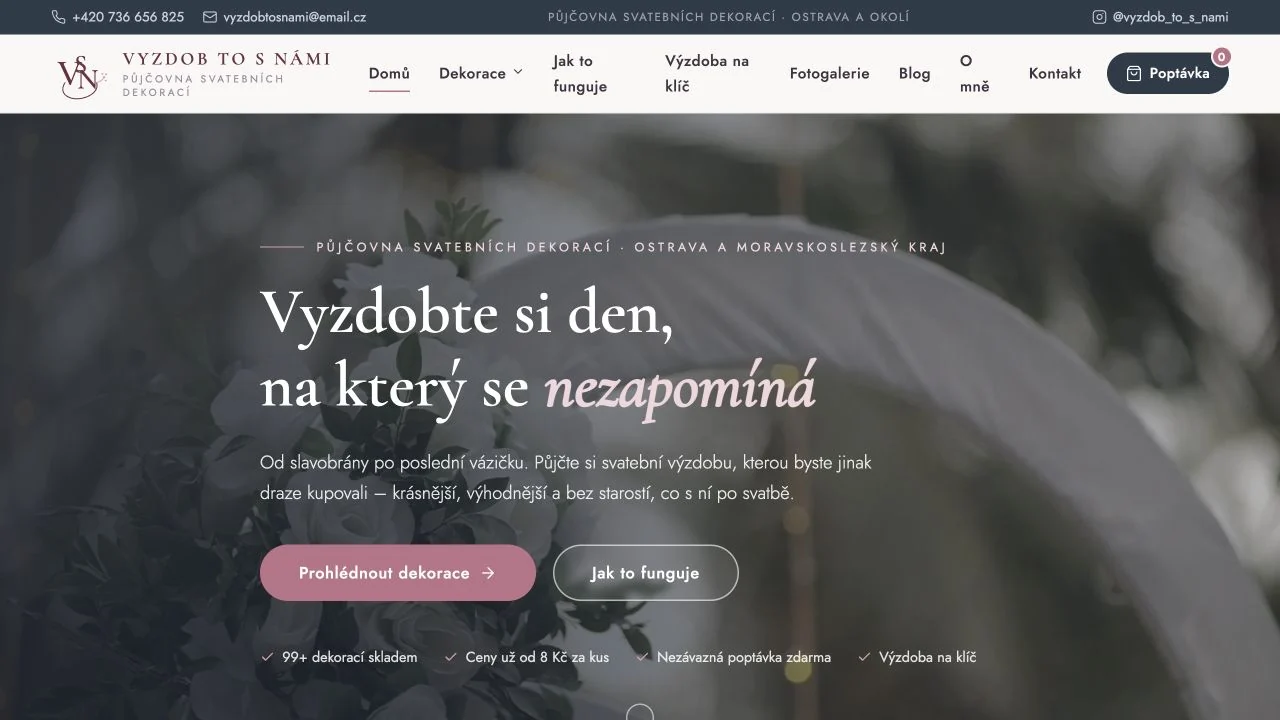
Vyzdob to s námi is a published wedding-decoration hire website from my Czech portfolio. Its categories, item details and enquiry list demonstrate a catalogue journey, though the language and rental business differ from a UK or US materials supplier.
Use it to discuss the browsing and enquiry pattern, not as evidence of results for a builders’ merchant. The English portfolio demonstrations show other layouts and planning tools.
Scope before features
A clear proposal.
A build you can review.
The standard packages cover defined brochure and service websites: up to 5, 7 or 10 core pages, with agreed editing and review allowances. A project archive, large catalogue, content-management system, stock connection or custom application needs its own scope; it is not automatically included in Extended.
Standard delivery is 3–7, 7–10 or 10–14 calendar days for Essentials, Established or Extended. These are calendar days from the start date we agree, once your content and access are ready. Your proposal confirms the schedule. The scope and initial payment are agreed before work starts, and prompt feedback is needed for reviews. More involved functionality has an agreed schedule of its own.
You supply accurate business details, draft copy and images you have permission to use. Full copywriting, photography, external subscriptions and ongoing SEO are separate unless included in your proposal. Agreed bespoke files and content transfer after final payment, with a handover; the domain stays in your business’s name.
Before we start.
Can customers send a product list without paying online?
Yes, where that flow is included in the agreed catalogue scope. The interface should call it an enquiry and explain that your team confirms availability, delivery and the quote. It must not imply that items have been reserved.
Can you connect our existing stock or accounting system?
We first review the system, API access, provider fees and the information it can supply. A connection is quoted separately, with responsibilities and failure states agreed. A catalogue demonstration does not establish compatibility with your system.
How much of our catalogue fits in Extended?
Extended covers up to 10 core brochure or service pages within its agreed content allowance. It does not include an unlimited product catalogue, ecommerce or stock integration. We can plan a first phase or prepare a separate catalogue proposal.
Before you commission.
Work directly with Charlie
Show me how
customers buy from you.
Share your current website, a few representative products and the questions your team handles most often. We’ll work out the right browsing and enquiry route before adding features.